The Challenge
A medical equipment supplier servicing hospitals across regional Victoria received an urgent order for diagnostic imaging components that needed to be installed during a scheduled hospital shutdown window. The installation team was booked for a specific three-day period, and if the equipment didn't arrive before the shutdown commenced, the installation would need to be rescheduled — at significant cost to both the supplier and the end client, with an estimated rebooking penalty of $18,000 and a six-week delay to the next available window.
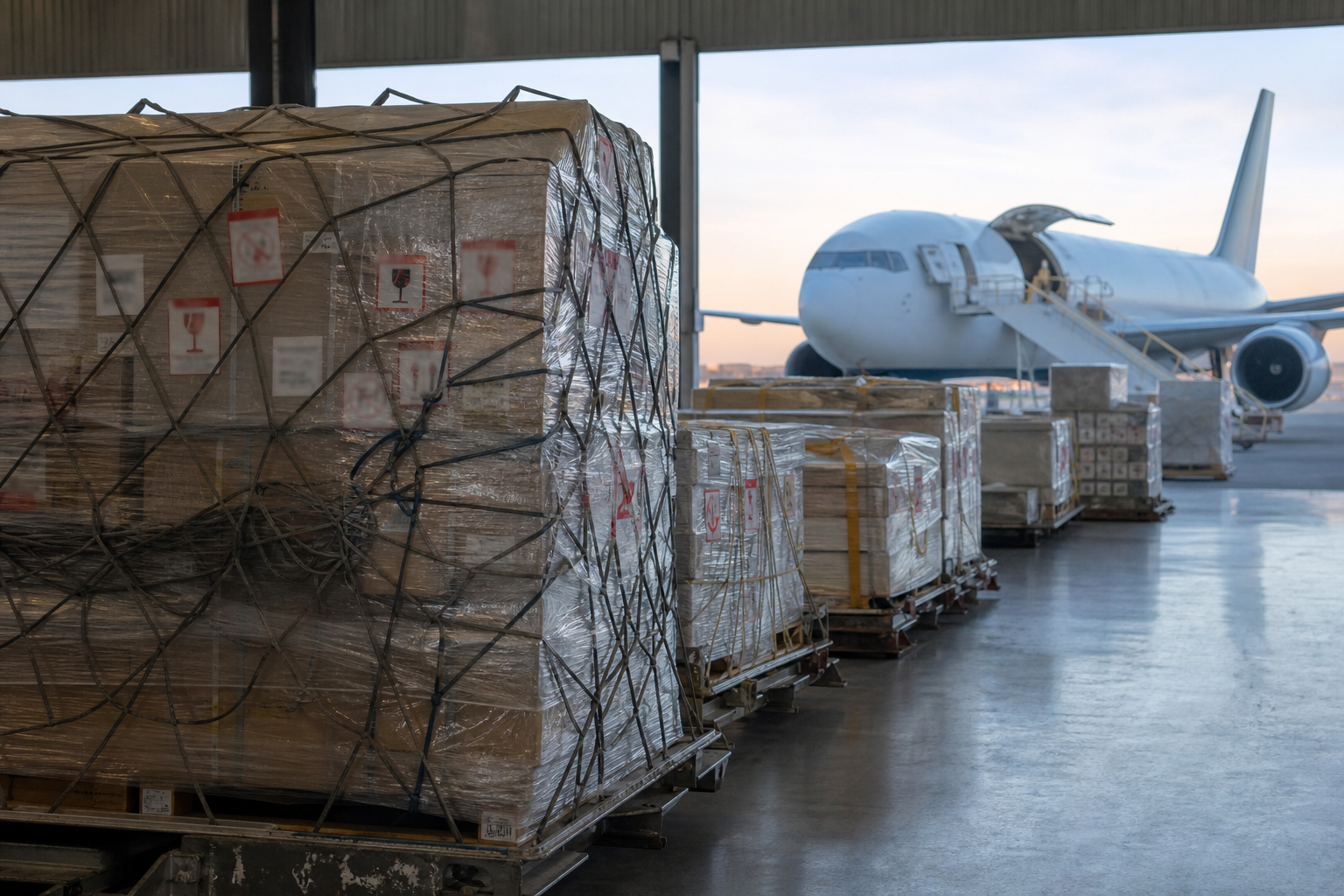
The cargo consisted of 12 wooden crates containing sensitive electronic medical devices, weighing a total of 860 kg with a volumetric measurement of 4.2 CBM. The equipment was fragile, static-sensitive, and required careful handling with specific orientation markings that had to be observed throughout the entire logistics chain. Some units contained lithium batteries (UN3481 Class 9 DG classification), which added regulatory complexity to the air freight booking.
The client contacted us on a Wednesday afternoon with the equipment ready for collection in Shenzhen, needing it delivered to a hospital in Ballarat, Victoria, by the following Monday morning. That gave us less than five calendar days — including a weekend — to collect, fly, clear customs, and deliver 180 kilometres from Melbourne Airport to regional Victoria.
Our Approach
Speed was critical, so we immediately activated our express air freight protocol. Within two hours of receiving the enquiry, we had confirmed space on a direct Shenzhen — CMelbourne flight departing Thursday evening. We chose a direct routing specifically to avoid the risk of mishandling or delays at a transhipment hub — a risk we weren't willing to take with fragile medical equipment on a tight deadline.
For the dangerous goods component (lithium batteries), our team prepared the Shipper's Declaration for Dangerous Goods (IATA DGD) and ensured all outer packaging carried the correct Class 9 hazard labels and UN3481 markings. We coordinated with the airline's DG acceptance team to pre-approve the documentation before the cargo arrived at the airport, eliminating any chance of rejection at the acceptance counter.
On the Australian side, we pre-lodged the customs import declaration on Thursday — before the flight had even departed. We attached the TGA (Therapeutic Goods Administration) notification, the commercial invoice, packing list, and the manufacturer's declaration of conformity. By the time the aircraft touched down at Melbourne Airport on Friday afternoon, the entry had already been assessed and given a green-light clearance status in the ICS system.
We also pre-booked a temperature-stable tail-lift van for the regional delivery, scheduling a Saturday morning pickup from the airline's cargo terminal. The driver was briefed on the handling requirements — no stacking, orientation arrows to be observed, and vibration-minimising load securing using air-ride suspension.
The Solution
The complete logistics chain was executed as follows:
- Wednesday PM: Enquiry received; space confirmed on Thursday evening direct flight (SZX – MEL)
- Thursday AM: Cargo collected from Shenzhen facility; DG documentation submitted to airline
- Thursday PM: Cargo accepted at Shenzhen Bao'an International Airport; import declaration pre-lodged in Australia
- Friday PM: Aircraft arrives Melbourne Airport; customs clearance confirmed within 2 hours of landing
- Saturday AM: Cargo released from airline terminal; loaded onto air-ride van for regional delivery
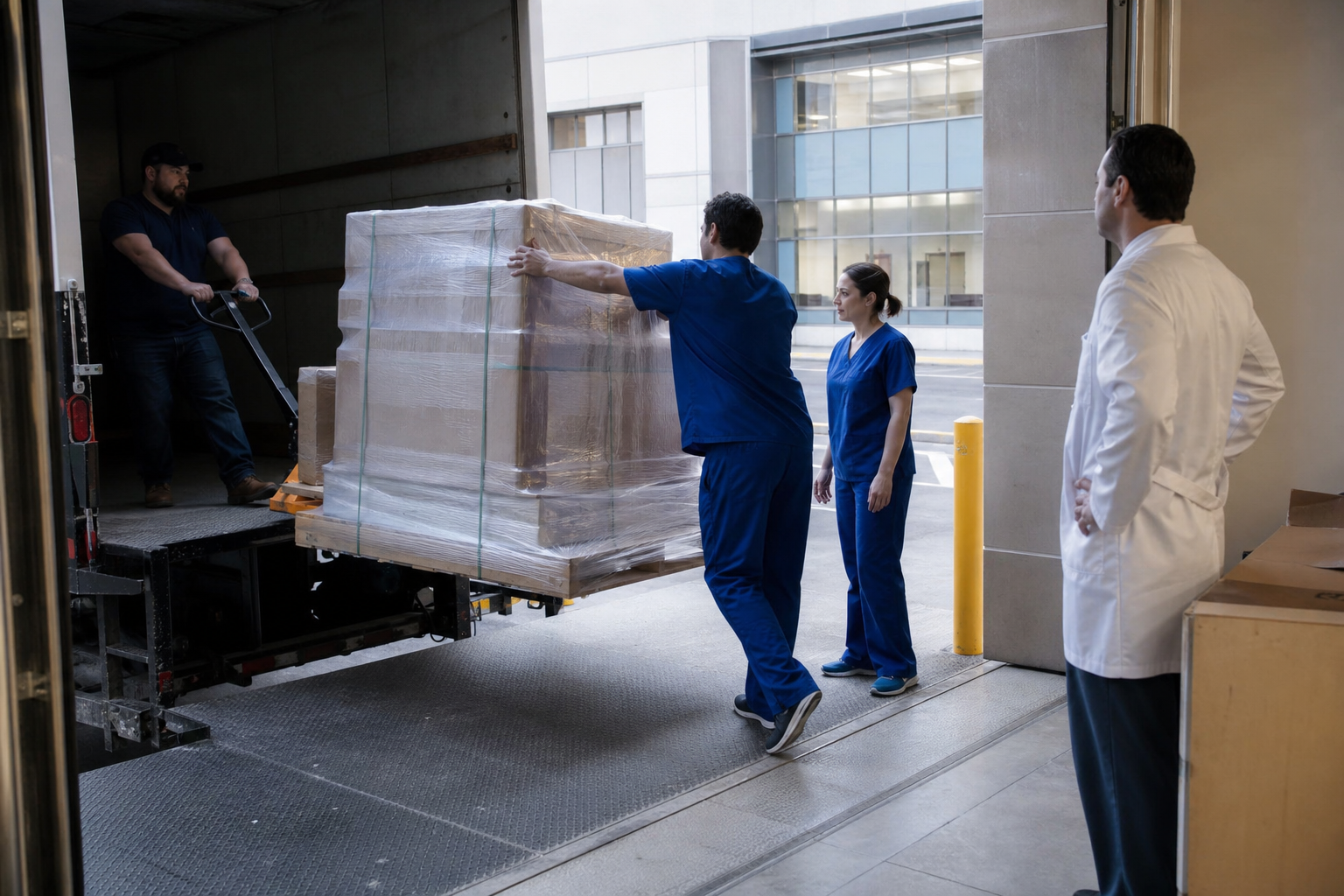
- Saturday PM: All 12 crates delivered to hospital site in Ballarat; signed POD obtained
Total elapsed time from collection in Shenzhen to delivery in Ballarat: 3 days. The installation team had the equipment on-site a full day before the shutdown window commenced, giving them time to unpack and stage the units in the correct rooms before the main installation work began on Monday morning.
Results
The shipment arrived intact with zero damage across all 12 crates. The hospital installation proceeded on schedule, and the medical imaging system was operational within the planned shutdown window. The client avoided the $18,000 rebooking penalty and the six-week delay that would have resulted from missing the window.
This project demonstrated our ability to mobilise rapidly for time-critical shipments, navigate dangerous goods air freight regulations, and coordinate weekend deliveries to regional locations. The client now uses our express air service for all urgent medical equipment imports and has referred two other medical suppliers to our team.