The Challenge
A Victorian seafood processor and wholesaler needed a reliable logistics partner to establish a twice-weekly export programme shipping premium Australian seafood to a distribution partner in Hong Kong. The cargo mix included live rock lobster, chilled abalone, and vacuum-packed fish fillets — each requiring different temperature zones and handling protocols.
The core challenge was maintaining an unbroken cold chain from the processing facility in Footscray, Victoria, all the way to the cold-store facility at Hong Kong International Airport. Any temperature excursion — even a brief one during the airport transfer stages — could result in product rejection by Hong Kong's Centre for Food Safety (CFS), leading to total loss of the consignment (valued at approximately $45,000 per shipment).
Additional complexity came from the regulatory side. Australian seafood exports require health certificates issued by the Department of Agriculture, Fisheries and Forestry (DAFF), export permits, and compliance with Hong Kong's import licensing requirements. The live lobster component also required specific packaging with oxygenated water containers, and each carton needed to comply with IATA Perishable Cargo Regulations (PCR) for air transport of live aquatic animals.
The exporter had previously lost two shipments (worth a combined $82,000) with their former logistics provider due to temperature excursions during tarmac transfer and insufficient documentation that caused holds at Hong Kong customs. They needed a partner who could guarantee cold-chain integrity and ensure paperwork was bulletproof every single time.
Our Approach
We developed a comprehensive cold-chain export protocol specifically for this account. The programme addressed four critical areas: packaging and temperature control, transport logistics, documentation, and real-time monitoring.
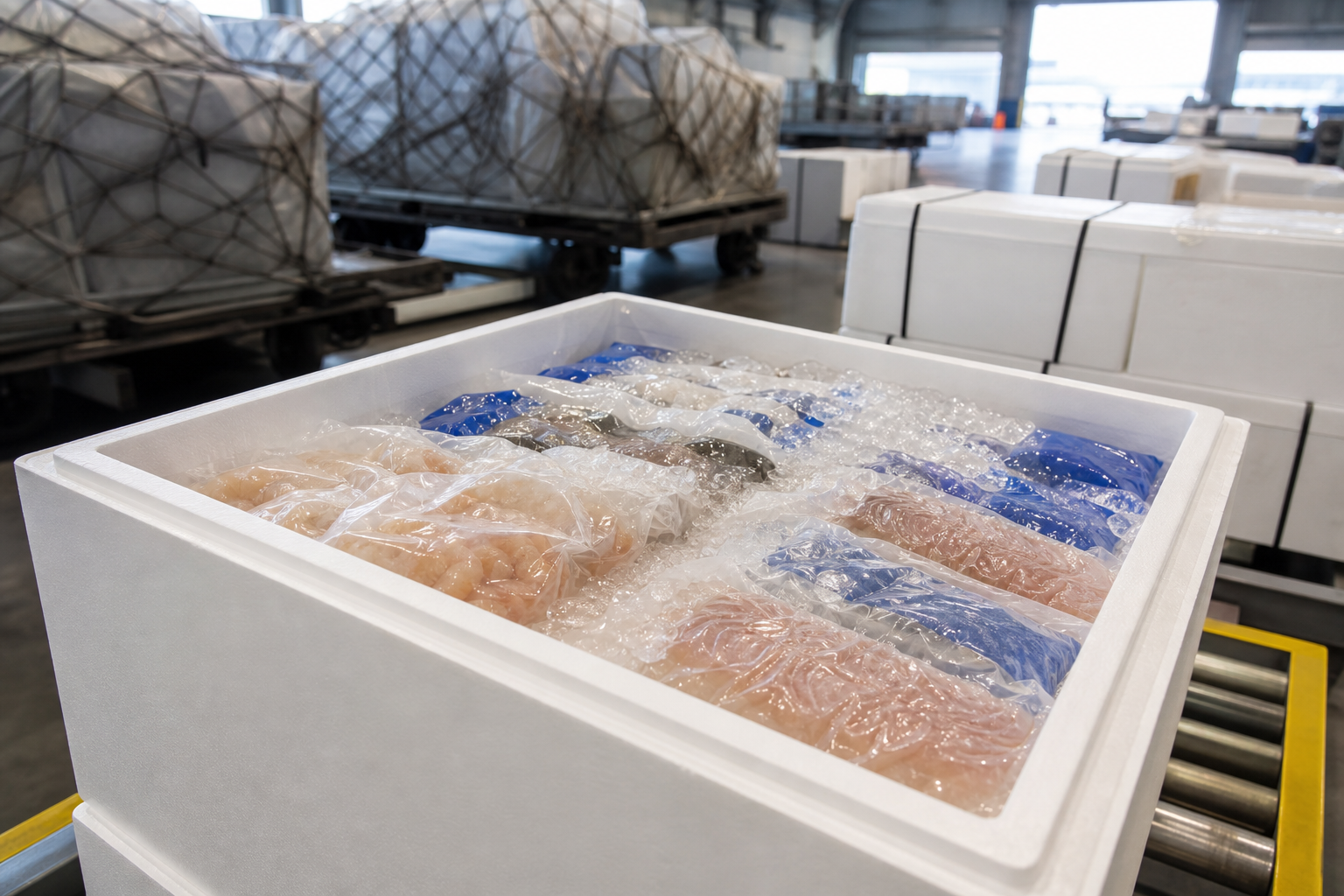
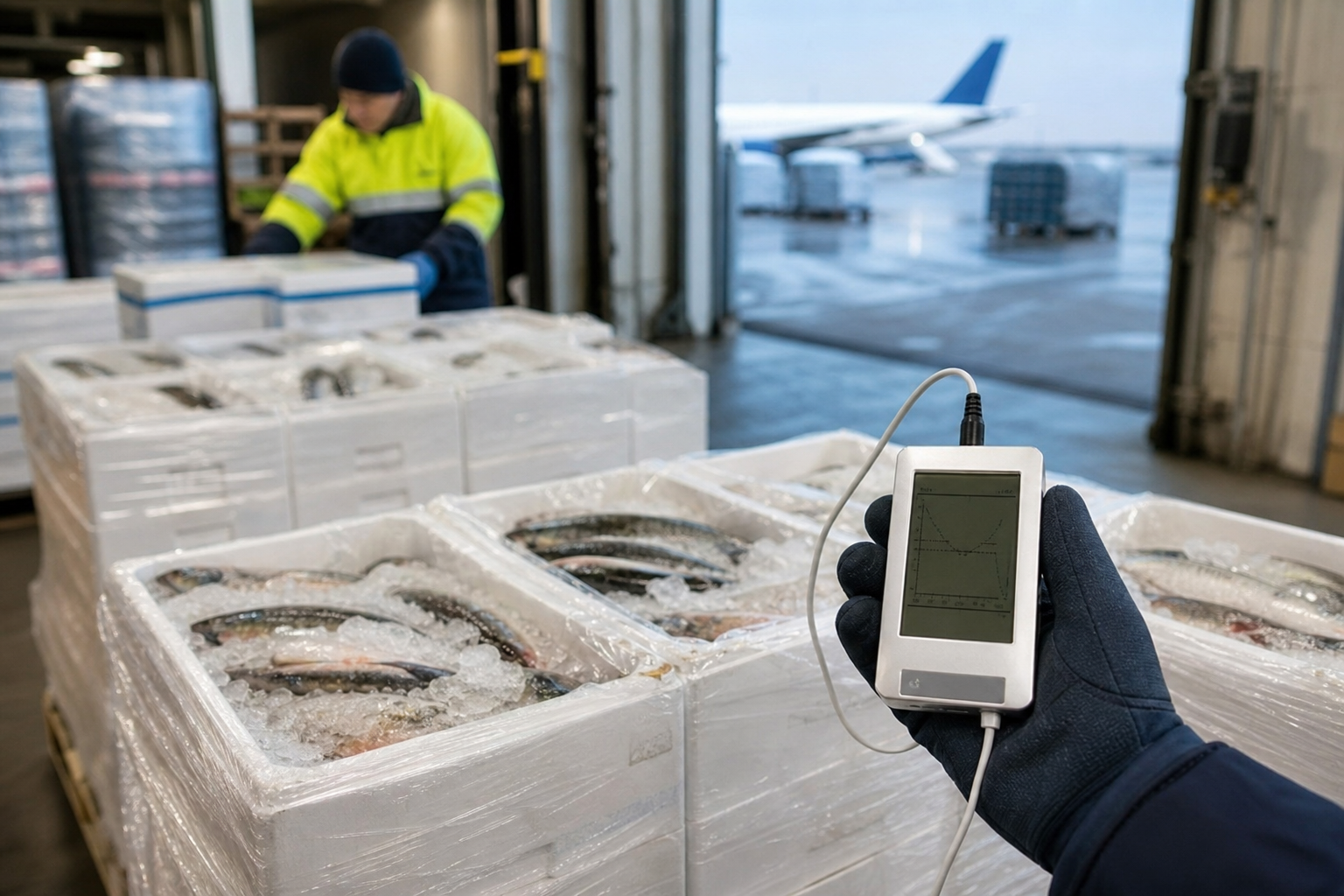
For packaging, we worked with the processor to specify insulated EPS (expanded polystyrene) containers with gel-ice packs for chilled products, maintaining a 2°C — °C range for up to 36 hours. Live lobsters were packed in purpose-built containers with damp wood-wool bedding and perforated lids, kept at 12°C — 6°C to maintain the animals in a dormant but alive state throughout transit. Each container received a calibrated digital temperature logger (Tempmate S1 Pro) that recorded readings every 60 seconds.
On the transport side, we secured a dedicated refrigerated van (set to 4°C) for the 35-minute transfer from the Footscray processing facility to Melbourne Airport's perishable goods terminal. We negotiated a priority handling agreement with the airline's perishable cargo team, ensuring our shipments were built into ULDs (unit load devices) within 90 minutes of arriving at the terminal and stored in the cool-room until flight departure — eliminating any tarmac exposure.
For documentation, we built a standardised export pack that included the DAFF health certificate, commercial invoice, packing list with batch codes, airway bill, Hong Kong CFS import notification, and the exporter's AQIS registration details. We pre-prepared templates for each shipment type and simply updated batch numbers and weights for each consignment, reducing documentation preparation time to under 30 minutes per shipment.
The Solution
The complete twice-weekly export programme operates as follows:
- Day 0, 4:00 AM: Processing complete at Footscray facility; packing into insulated containers with temperature loggers activated
- Day 0, 5:30 AM: Refrigerated van collection; DAFF health certificate issued
- Day 0, 6:15 AM: Cargo arrives at Melbourne Airport perishable terminal; documentation submitted to export customs
- Day 0, 7:00 AM: Export clearance granted; cargo built into airline ULD in cool-room
- Day 0, 10:30 AM: Flight departs Melbourne (CX or QF service to HKG)
- Day 0, 6:30 PM: Aircraft arrives Hong Kong; cargo transferred to cold-chain handling agent
- Day 0, 8:00 PM: Hong Kong customs clearance complete; temperature logger data downloaded and verified
- Day 0, 9:00 PM: Delivery to distribution centre cold-store; POD with temperature compliance certificate issued
Total elapsed time from packing completion to cold-store delivery: approximately 14–16 hours. Every shipment arrives within the same calendar day it departs, ensuring maximum product freshness and shelf life for the end customer in Hong Kong's premium restaurant and retail markets.
Results
Since establishing this programme, we have completed over 104 consecutive shipments with a 100% cold-chain compliance rate and zero rejections at Hong Kong customs. Every single temperature logger has recorded readings within the specified range, and the Hong Kong distribution partner has reported consistently high product quality scores from their restaurant and retail clients.
The programme generates approximately $90,000 in export revenue per week for the Victorian seafood processor and has been instrumental in securing long-term supply agreements with two additional Hong Kong-based buyers. We are now in discussions to extend the service to include a Shanghai route using the same cold-chain protocols.