The Challenge
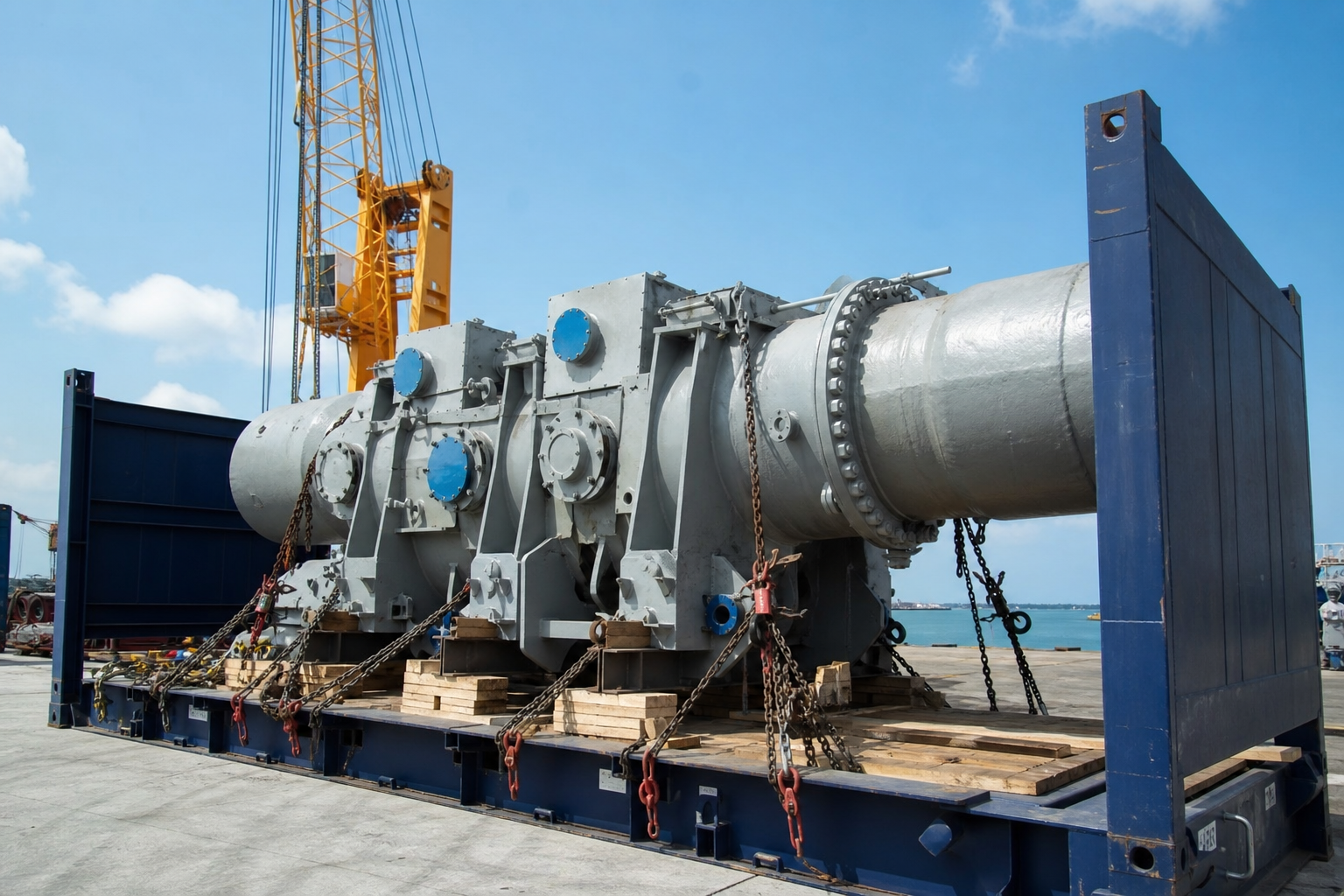
A manufacturing company in Dandenong, Victoria, purchased two CNC milling machines and a hydraulic press from a machinery fabricator in Ho Chi Minh City, Vietnam. The equipment was too large and heavy to fit inside standard shipping containers — the largest piece measured 11.8 metres long, 3.2 metres wide, and 3.4 metres high, with a unit weight of 18,200 kg. This qualified as Out of Gauge (OOG) cargo requiring specialist flat rack containers and special stowage arrangements on the vessel.
Beyond the ocean freight complexity, the real challenge began once the cargo arrived in Melbourne. The dimensions exceeded standard road transport limits in Victoria (maximum 2.5m width for general access), which meant we needed over-dimensional vehicle permits from VicRoads, a defined travel route with time-of-day restrictions, pilot vehicles for escort, and potentially temporary removal of overhead obstructions along the delivery path. The delivery site in Dandenong also required a 50-tonne mobile crane for unloading, which needed to be pre-booked and positioned before the machinery arrived.
The client had never imported oversized cargo before and was unfamiliar with the permit requirements, the additional costs involved in OOG shipping, and the timeline implications. They had a factory shutdown window of 10 days to receive, position, and commission the new equipment — any delay to delivery would mean pushing the commissioning back by several weeks and delaying their production line expansion.
Our Approach
We began with a detailed cargo survey. The Vietnamese manufacturer provided engineering drawings and 3D models of each machine, which we used to calculate exact shipping dimensions (including any protruding components, lifting lugs, and crating allowances), centre-of-gravity positions, and lashing requirements. This data was critical for both the shipping line's stowage planning and our transport permit applications in Victoria.
For ocean freight, we booked two 40ft flat rack containers on a direct HCMC — CMelbourne service. We coordinated with the shipping line's special cargo team to ensure the flat racks were loaded in under-deck positions (protected from weather) and that adjacent container slots were kept clear to accommodate the over-width cargo. Our origin agent in Vietnam supervised the loading operation at Cat Lai terminal, ensuring each piece was properly secured with turnbuckles, wire lashings, and timber blocking according to the CTU Code (Code of Practice for Packing of Cargo Transport Units).
On the Australian side, we lodged permit applications with VicRoads four weeks before the vessel's ETA. The application included a detailed route survey identifying every bridge, powerline crossing, and intersection along the 28-kilometre delivery route from Webb Dock to Dandenong. We obtained Class 1 Heavy Vehicle permits specifying a travel window of 9:30 PM to 5:00 AM (night movement only) with two pilot vehicles — one leading and one following.
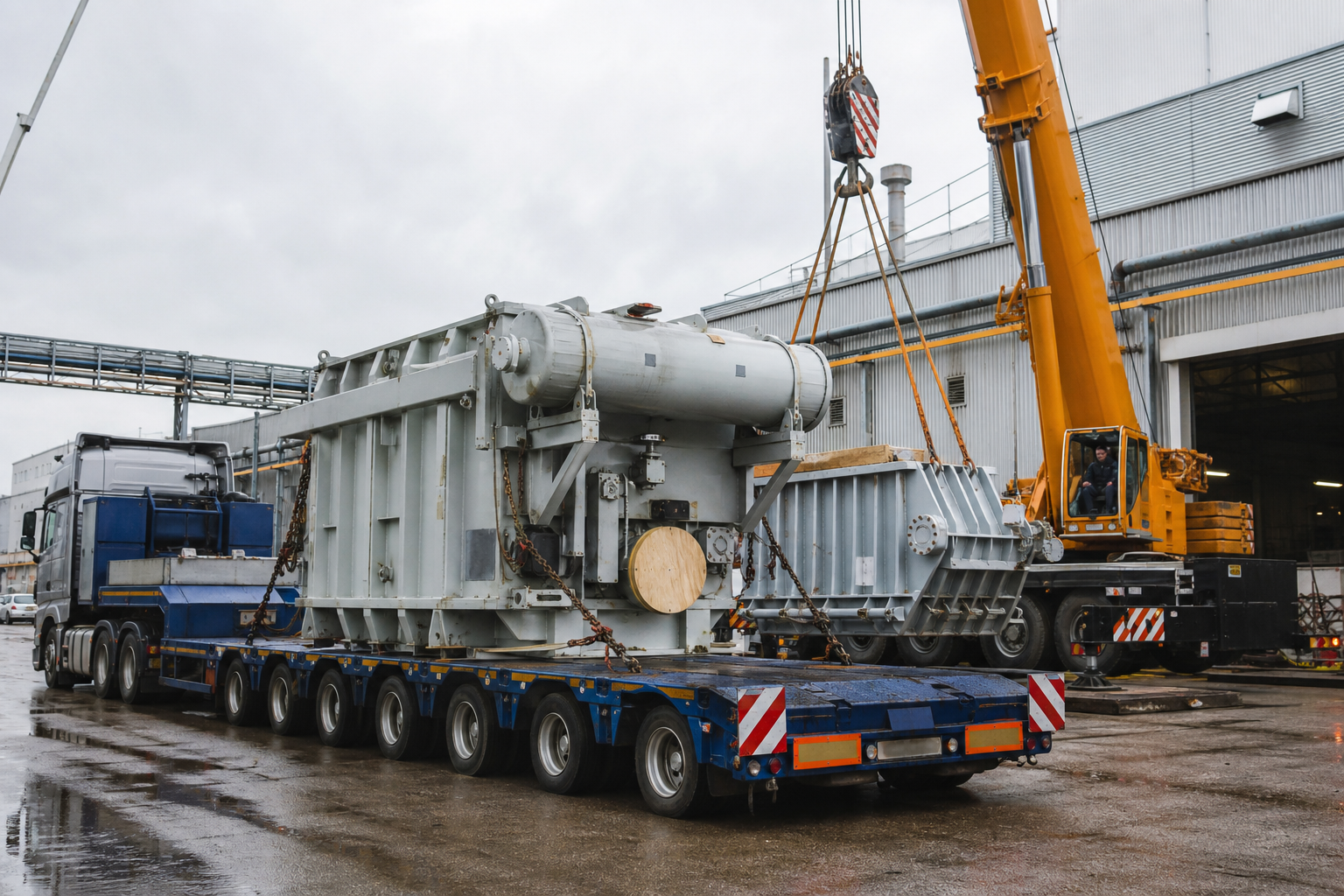
We also engaged a heavy haulage contractor with a 6-axle low-loader trailer rated to 45 tonnes, and pre-booked a 50-tonne Liebherr mobile crane for the unloading at the Dandenong factory. The crane required its own access plan — including ground load-bearing assessments — which we coordinated with the client's site manager two weeks in advance.
The Solution
The project was executed in carefully sequenced stages:
- Week 1-2: Cargo survey, engineering drawing review, shipping line booking, permit applications lodged
- Week 3: Loading supervision at Cat Lai terminal, Vietnam; lashing inspection and photography
- Week 3-4: Ocean transit (12 days HCMC to Melbourne via direct service)
- Week 4: VicRoads permits granted; heavy haulage and crane bookings confirmed
- Week 5, Day 1: Vessel discharge at Webb Dock; flat racks transferred to heavy-lift storage area
- Week 5, Day 2: Import customs clearance (pre-lodged); biosecurity inspection passed
- Week 5, Day 3 (night): First flat rack loaded onto low-loader; night transport to Dandenong with pilot escort
- Week 5, Day 4 (pre-dawn): 50-tonne crane unloads first machine into factory; low-loader returns for second load
- Week 5, Day 4 (night): Second flat rack transported and unloaded at site
Both machines were positioned on their prepared foundations within the client's factory by 5:00 AM on Day 4 — well within the 10-day shutdown window. The commissioning engineers (who had flown in from Vietnam) were able to begin installation work that same morning.
Results
The entire project — from initial planning to machinery positioned on foundations — was completed in 32 days, finishing 6 days ahead of the client's shutdown deadline. Both machines arrived without any transport damage, and the Vietnamese commissioning team was able to complete the full installation and testing within the shutdown window as planned.
The client estimated that a delayed delivery would have cost them approximately $120,000 in lost production time and additional contractor travel costs. By delivering ahead of schedule and managing all permit and logistics complexity on their behalf, we removed that risk entirely.
This project also demonstrated our ability to manage complex multi-party logistics involving shipping lines, port authorities, government permit bodies, heavy haulage contractors, and crane operators — all coordinated through a single point of contact for the client.