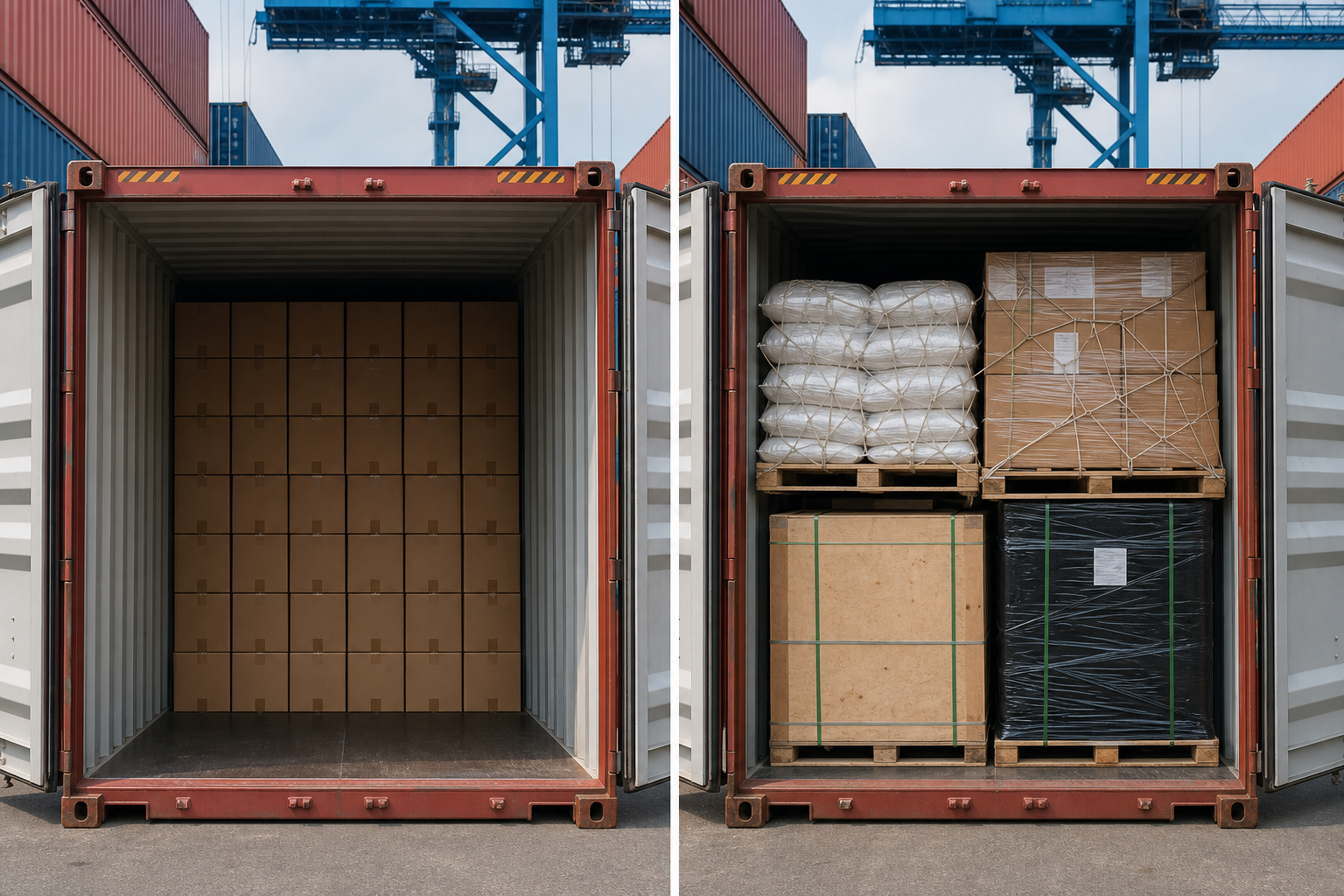
The Fundamental Choice in Ocean Freight
Every importer shipping goods by sea from Asia to Australia faces one critical decision early in the process: should you book a Full Container Load (FCL) or a Less-than-Container Load (LCL)? The answer depends on your cargo volume, budget constraints, delivery timeline, and how much control you need over your shipment.
At LEVAO INTERNATIONAL, we handle both FCL and LCL shipments daily on routes between China, Vietnam, Thailand, Malaysia, Indonesia, Japan, and Melbourne. This guide breaks down the practical differences so you can make an informed decision for your next shipment.
What Is FCL (Full Container Load)?
FCL means you book an entire shipping container exclusively for your cargo. Standard options include 20-foot containers (approximately 33 cubic metres), 40-foot containers (approximately 67 cubic metres), and 40-foot high-cube containers (approximately 76 cubic metres). Even if your goods don't fill the container completely, nobody else's cargo shares the space.
The key advantages of FCL include:
- Lower per-unit cost — When you have enough volume to fill (or nearly fill) a container, the cost per cubic metre drops significantly compared to LCL.
- Faster transit — FCL containers go directly from origin port to destination port without consolidation or deconsolidation stops.
- Reduced handling — Your goods are loaded once at the factory and unloaded once at destination, minimising damage risk.
- More predictable scheduling — FCL containers have priority allocation on vessels and more reliable ETAs.
What Is LCL (Less-than-Container Load)?
LCL is a consolidation service where your cargo shares container space with shipments from other importers. You pay only for the volume your goods occupy, measured in cubic metres (CBM). A freight forwarder like LEVAO consolidates multiple shippers' goods into one container at a Container Freight Station (CFS) at origin, and deconsolidates them at destination.
LCL works well when:
- Your volume is under 15 CBM — Below this threshold, LCL is almost always more economical than booking a 20-foot container.
- You ship frequently in small quantities — Regular smaller shipments keep stock fresh without tying up capital in bulk orders.
- You're testing a new product line — LCL lets you import trial quantities without committing to a full container.
- Budget is the primary concern — You only pay for the space you use, plus applicable CFS handling charges.
Cost Comparison: When Does FCL Become Cheaper?
The crossover point varies by trade lane, but on the China-to-Melbourne route, FCL typically becomes more cost-effective when your cargo exceeds 12-15 CBM. At that volume, the total cost of an LCL shipment (per-CBM rate plus CFS charges, documentation fees, and deconsolidation fees at destination) often approaches or exceeds the flat rate for a 20-foot container.
Consider this example: if LCL rates from Shanghai to Melbourne are around AUD $55-75 per CBM (plus local charges of approximately $150-250), a 14 CBM shipment could cost $1,000-1,300 in freight alone. A 20-foot FCL on the same route might cost $1,200-1,800 all-in, but gives you 33 CBM of capacity — significantly better value per cubic metre if you can fill it.
Your freight forwarder should provide transparent comparisons. At LEVAO, we routinely quote both options when a shipment falls in the crossover zone, so you can see the numbers side by side.
Transit Time Differences
FCL shipments are generally 3-7 days faster than LCL on the same route. The difference comes from consolidation time at origin (1-3 days while the CFS fills the container) and deconsolidation at destination (1-2 days for unloading and sorting at the Melbourne CFS).
For time-critical stock replenishment or seasonal goods, this difference matters. If your goods need to hit shelves by a specific date, factor in the additional LCL handling time when planning your order timeline.
Risk and Cargo Safety Considerations
With FCL, your cargo sits alone in a sealed container from door to door. With LCL, your goods are handled multiple times — loaded at the CFS, potentially repositioned during the voyage, and unloaded at the destination CFS. Each handling point introduces a small risk of damage, contamination, or loss.
For fragile goods, high-value items, or products sensitive to contamination (such as food-grade packaging or chemicals), FCL provides a controlled environment. You can also specify container condition requirements, install monitoring devices, and seal the container yourself at loading.
Making the Right Choice for Your Business
There's no universal answer. The right choice depends on your specific circumstances. As a practical rule of thumb:
- Under 8 CBM: LCL is almost certainly your best option.
- 8-15 CBM: Get quotes for both and compare total landed costs including all local charges.
- Over 15 CBM: FCL will likely save you money and deliver faster.
- Fragile or high-value cargo: Lean towards FCL regardless of volume for better security.
At LEVAO INTERNATIONAL, we help importers make this decision on every shipment. We'll provide clear, itemised quotes for both options and recommend the best approach based on your cargo type, volume, and delivery requirements. Contact us for a no-obligation comparison quote.